Blog and News
 01 January 2026
Muftia Parasati
01 January 2026
Muftia Parasati How Agentic AI in Banking Supports Smarter Financial Operations
AI adoption in various business sectors has surged drastically in recent years. According to Hostinger, as of 2025, 78% of companies worldwide have adopted AI technologies in their business processes. Of the 359 million companies worldwide, around 280 million use AI in at least one business function. On average, companies are now using AI in three different tasks. Technology-based companies are leading the adoption by 94%, followed by financial services at 89%. One of the emerging AI technologies in financial services is agentic AI in banking.
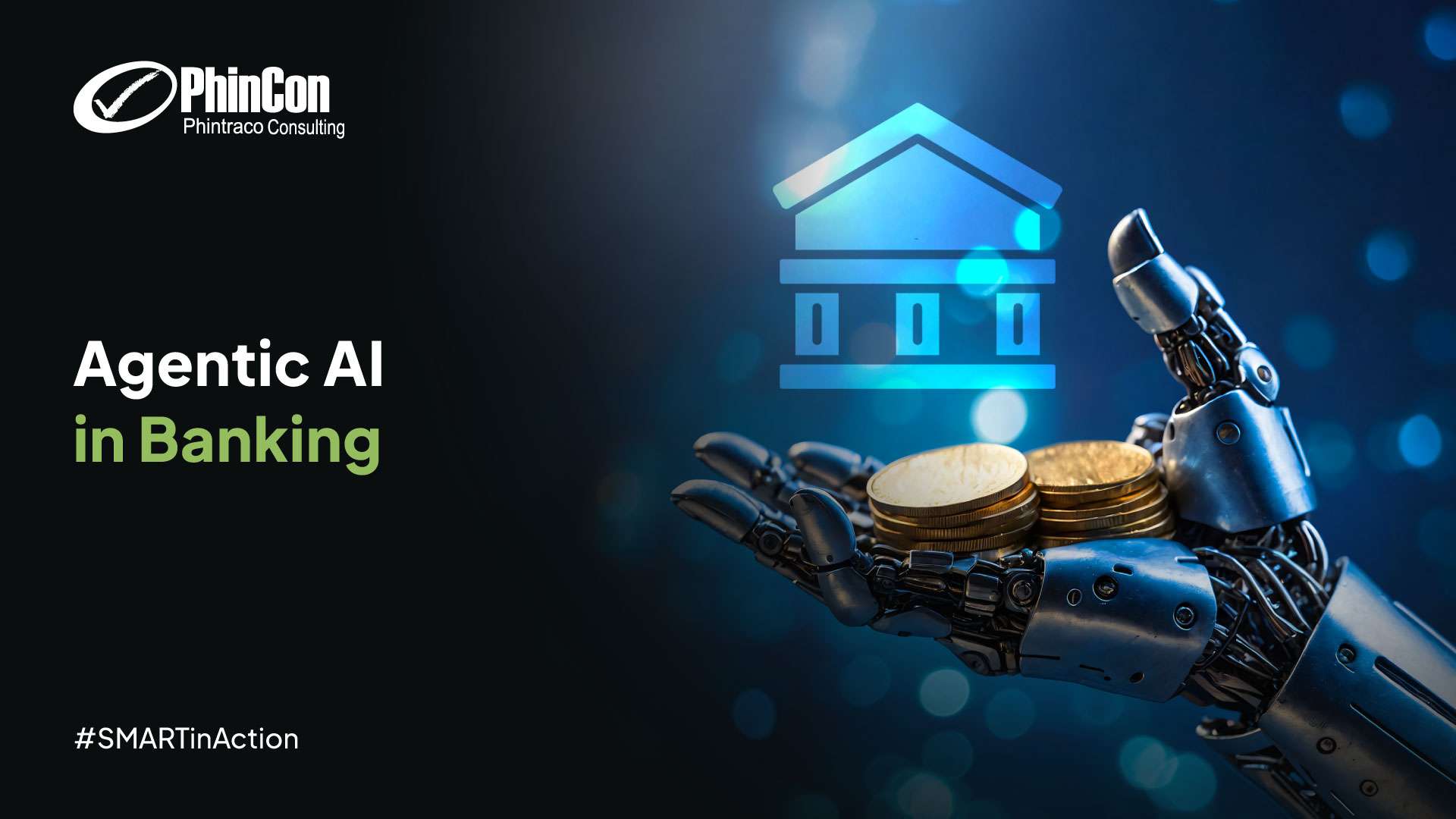
Agentic AI in banking is becoming one of the most transformative technologies in the financial industry. As banks strive to deliver faster, more innovative, and more personalized experiences, agentic AI offers a new level of automation and intelligence that goes beyond traditional AI tools.
This article will delve deeper into the meaning of agentic AI, how it works, its use cases, and the benefits it offers financial institutions.
What is Agentic AI in Banking?
Agentic AI in banking is an autonomous AI system that perceives conditions, makes decisions, and executes actions with minimal human intervention. It goes beyond traditional AI by proactively handling complex workflows. Unlike predictive AI, which only flags insights, or rigid automation that follows scripts, agentic AI operates with context, intent, and adaptability. AI agents can break down complex problems, adapt to changes, and interact with tools and external systems.
According to the Financial Brand, rapid adoption of agentic AI in the banking sector is already happening. 70% of banking institutions are using agentic AI through existing deployments or active pilot projects. Many financial institutions use agentic AI in banking for fraud detection and security.
How Does Agentic AI in Banking Work?
Agentic AI in banking works through several critical processes: data integration, predictive analysis, and autonomous decision-making. First, agentic AI will collect information from sources such as transactions, customer data, and market data. This data combination strengthens forecasting, enhances decision-making, and helps understand customer needs.
Beyond insights, agentic AI also enables autonomous decision-making by automating routine processes, such as credit evaluations. By rapidly evaluating applications against predefined criteria, agentic AI reduces processing time and frees human staff to focus on more complex tasks.
What is an Example of Agentic AI in Banking?
One primary example of agentic AI development in banking is the implementation for fraud detection. According to the Financial Brand, more than half of executives report high capability in fraud detection, with banks using agentic AI to monitor suspicious activities and automatically respond to threats continuously. Agentic AI detects fraud by monitoring transactions in real time, identifying anomalies, freezing suspicious activity, and alerting teams. This is important to reduce financial losses and false positives.
Another example of agentic AI in banking is customer support. Agentic AI can take the form of intelligent virtual assistants or chatbots that perform multi-step tasks. The tasks include opening accounts, responding to inquiries with context, prompting product recommendations, etc. AI agents can also verify identities, scanning policies, and auto-filling reports after human validation.
Agentic AI is also implemented in Know Your Customer (KYC) and Anti-Money Laundering (AML) processes. It’s done by automatically extracting data from documents, verifying identities, and generating compliance reports. Many banks use agentic AI to reduce onboarding time and staff workload, as it cross-checks transaction histories and escalates only high-risk cases.
Benefits of Agentic AI in the Banking Industry
With the rise of agentic AI adoption in the banking industry, many institutions are entering a new era of digital transformation. It not only transforms how institutions operate but also how they serve customers. Here are the benefits of agentic AI implementation in banking:
Cost Efficiency
One of the main benefits of adopting agentic AI is cost efficiency. Agentic AI reduces costs by automating manual and repetitive tasks that are traditionally expensive and prone to error. Human agents can focus on more complex tasks that require careful attention. It addresses technical costs associated with legacy systems and streamlines workflows, leading to savings on operational expenses. For example, banks can reduce costs by 40-60% by implementing agentic AI, which optimizes resource usage and lowers reliance on costly human interventions.
Improves Operational Productivity
Other than operational costs, agentic AI also affects operational productivity. Agentic AI is crucial to boost banks’ productivity by autonomously managing complex workflows with minimal human input. This helps accelerate routine processes such as loan approvals, compliance checks, and transaction monitoring. Human staff focus on more strategic and complex tasks by reducing manual workload and coordination across multiple systems. Multi-agentic AI can improve productivity by optimizing workflow and speeding response times. This will increase throughput and operational agility.
Enhances Risk Mitigation
Agentic AI enhances risk mitigation by providing real-time fraud detection and autonomous compliance monitoring. It uses behavioral baselines and anomaly detection to quickly identify suspicious activity. This will reduce fraud response times and prevent regulatory fines. Continuous, automated compliance reporting will reduce false positives. It helps banks maintain transparency under strict regulations. Proactive risk management enabled by agentic AI reduces losses from human error and delayed responses. This will strengthen banks’ resilience and adaptability.
Better Customer Experience
Another benefit of implementing agentic AI is a better customer experience. Personalization is one of the most popular trends in customer experience, meaning to make customers feel more special than ever. With agentic AI, personalization during customer interactions will be much easier. Agentic AI automatically combines the right financial products and services to create tailored solutions. Automated agentic AI can reduce response time by up to 50%, enabling proactive issue handling and smoother support. This will result in higher customer loyalty and satisfaction through personalized customer experience and more thoughtful recommendations.
Accelerate Agentic AI Adoption with PhinCon’s IT Outsourcing
Thinking of how to build agentic AI? But don’t know where to start? PhinCon got your back. We offer end-to-end IT outsourcing solutions connecting companies with Indonesia’s top IT professionals to support agentic AI development. We provide IT experts across various key roles, including Android Developer, iOS Developer, Fullstack Developer, Golang Developer, Mobile Developer, Quality Assurance, DevOps, Business Analyst, Solution Architect, Project Manager, L2 Operation Support, and more.
PhinCon manages everything, from recruitment to payroll, benefits, and tax compliance, so you can focus on growing your business. Need more operational efficiency? Our BPO services, including contact centers and customer support, offer scalable solutions to improve performance and reduce costs. With PhinCon, you get a reliable partner to support your digital journey and business goals.
For more information regarding our IT outsourcing solutions, contact us at sales.sg@phincon.com.
Frequently Asked Question
1. How can agentic AI improve customer service in Indonesian banks?
Agentic AI can help banks deliver faster and more personalized interactions by autonomously understanding customer needs and responding in real time. It can assist with routine inquiries, provide tailored financial recommendations, and reduce response times, leading to a smoother customer journey and higher satisfaction.
2. Can I integrate agentic AI into my bank’s mobile app?
Yes. Agentic AI can be integrated into mobile banking apps to power features such as intelligent virtual assistants, proactive alerts, and real-time financial advice. With proper backend integration and secure data handling, these AI systems can interact with users directly through the app to enhance engagement and self-service capabilities.
3. What are the key benefits of using agentic AI in banking operations?
Agentic AI goes beyond traditional automation by reasoning, planning, and executing multi-step tasks autonomously. It can streamline processes like loan onboarding, fraud detection, compliance monitoring, and credit decisioning while reducing manual workloads and improving operational efficiency.
4. How does agentic AI differ from traditional AI used in banks?
Traditional AI in banking often assists by generating insights or recommending actions, but still relies on human decisions. Agentic AI has the ability to act on those insights independently, planning steps, executing tasks, and adapting to context with minimal supervision, making it more proactive and capable of handling complex workflows.
5. What challenges should banks consider when adopting agentic AI?
While agentic AI offers efficiency and scale, banks must address challenges such as transparent decision-making, data governance, regulatory compliance, and integration with existing systems. Clear oversight mechanisms and ethical frameworks are crucial to ensure reliability and trust in autonomous AI workflows.
Writen by Muftia Parasati S.S., Content Writer at Phincon, specializing in research-based and SEO-optimized content on technology and digital business topics. | Muftia LinkedIn Profile
Reviewed by Samuel Tambunan A.Md.Kom., Product Manager at Phincon with 15+ years of experience in digital transformation and enterprise solutions. | Samuel LinkedIn Profile
Editor: Trie Ayu Feminin & Irnadia Fardila
Categories